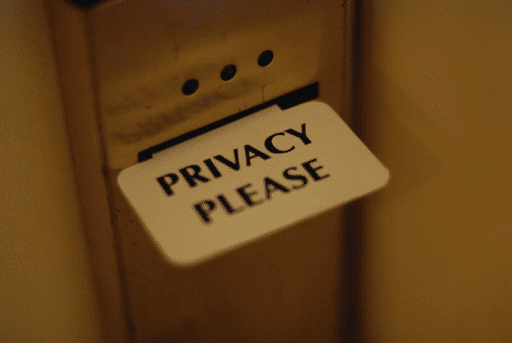
Is this “newsworthy”? After over three years of trying to reach a settlement on their own, Hulk Hogan, whose real name is Terry Bollea, took Gawker Media to court for $100 million. Hulk Hogan claimed an invasion of privacy on the part of Gawker over a tape showing him having sex with a friend’s wife.
The case forced the Florida court to confront what is a “legitimate public concern” and provide direction on the term. In Florida, private information can only be published if it is a “legitimate public concern”; in other words, if it’s “newsworthy.” This is often determined on a case-by-case basis. The courts consider factors such as the extent to which the individual became famous voluntarily, the depth of intrusion into the individual’s private life, and the social value of the information.
The case tested the limits of the First Amendment protections offered to journalists and challenged how lenient the courts should be with them. The definition of “newsworthiness” seems to vary across the US. It’s no surprise that this is not the first time a sex tape scandal has come before the courts. In 1998, the California District Court dealt with the Pamela Anderson and Bret Michaels sex tape issue. In that case, the court held that the tape itself could not be posted because it violated copyright law.
The Verdict and Its Aftermath
In March 2016, the Florida jury returned a verdict for Hulk Hogan, awarding him $115 million in compensatory damages and $25 million in punitive damages — a total of $140 million. The verdict effectively bankrupted Gawker Media, which filed for bankruptcy and was ultimately sold. The case was later revealed to have been financed by Peter Thiel, a Silicon Valley billionaire and longtime Gawker critic, raising significant debate about the ethics of litigation funding as a tool to silence media organizations.
The Bollea v. Gawker litigation remains one of the most consequential privacy cases of the modern internet era, raising questions about the limits of press freedom, the privacy rights of public figures, and the role of third-party litigation financing in shaping legal outcomes.
The Legal Framework: Privacy Rights of Public Figures
The Hogan case illustrates the tension between two foundational legal interests: the First Amendment’s protection of press freedom and the common law right of privacy. For public figures, this tension is resolved differently than for private individuals.
The Newsworthiness Doctrine
Under Florida law — and the law of most states — a media organization that publishes truthful information about a public figure is protected from privacy tort liability as long as the information is “newsworthy” or of “legitimate public concern.” The newsworthiness defense is broad but not unlimited. Courts weigh several factors:
Voluntary public figure status: Public figures who have thrust themselves into the spotlight — politicians, entertainers, professional athletes — retain reduced privacy expectations in matters connected to their public roles, but retain greater privacy interests in purely private conduct unrelated to why they are famous.
The depth of intrusion: Courts are more protective when the publication reaches into the most intimate aspects of private life, including sexual conduct, medical conditions, and family relationships.
The social value of the information: Publication of information that serves a genuine public interest — accountability for a public official’s conduct in office, for example — is more easily defended than publication that serves primarily to satisfy prurient curiosity.
The Florida jury in the Hogan case determined that publishing a video of Hulk Hogan’s private sexual conduct did not meet the newsworthiness standard, notwithstanding Hogan’s status as a celebrity who had publicly discussed his sex life in media appearances. The jury’s conclusion — that even a celebrity retains a right of privacy in his sexual conduct — reflects a growing judicial recognition that fame does not eliminate all privacy rights.
The Tort of Invasion of Privacy: Public Disclosure of Private Facts
The claim at the heart of the Hogan case was public disclosure of private facts — a common law privacy tort recognized in the Restatement (Second) of Torts § 652D. To establish this claim, a plaintiff must prove: (1) publicity was given to private information about the plaintiff; (2) the information would be highly offensive to a reasonable person; and (3) the matter publicized was not of legitimate public concern. The third element is where newsworthiness becomes decisive.
Copyright as a Privacy Tool
Where a person has taken or commissioned intimate photographs or video recordings of themselves, copyright law provides an alternative avenue for content removal. The creator of a photograph is the initial copyright owner (absent a work-for-hire arrangement). A DMCA notice under 17 U.S.C. § 512(c) can compel a platform to remove infringing content, and a copyright infringement lawsuit can seek statutory damages of up to $150,000 per work for willful infringement under 17 U.S.C. § 504. In the Pamela Anderson case referenced in the original Hogan article, the copyright angle proved to be the more reliable legal tool.
Lessons for the Digital Age
The Hogan-Gawker case established several important principles that continue to shape privacy litigation:
Public figure status does not eliminate the right of privacy in purely personal conduct. The scope of a public figure’s reduced privacy expectation is connected to the domain in which they are publicly known.
Sexual content involving private individuals — even when those individuals are celebrities — is not presumptively newsworthy simply because a media organization chooses to publish it.
Damages for privacy violations can be substantial. A jury moved by the egregious nature of the intrusion may award damages that bear no relationship to the defendant’s revenue from the publication.
The press freedom defense under the First Amendment has limits. Media organizations that push those limits do so at significant financial risk.
Contact Revision Legal About Internet Privacy Claims
If you are dealing with an internet privacy violation — whether a non-consensual disclosure of intimate images, publication of private information, or another form of online privacy invasion — Revision Legal’s internet lawyers can evaluate your claims and advise on your options. Contact us at 855-473-8474 or complete the contact form on this page.
Artificial intelligence has become part of nearly every business operation. Businesses now use AI tools to write marketing copy, generate product images, compose emails, draft social media posts, and produce video and audio content at a scale that was not possible a few years ago. The efficiency gains are real. But so are the legal […]
Receiving a cease and desist letter can feel alarming. One minute you are running your business as usual, and the next you are staring at a legal demand accusing you of trademark infringement, copyright violation, breach of contract, or some other wrong. The situation can escalate quickly if not handled properly. But receiving a cease […]
Learn what counts as deceptive pricing in e-commerce, including false discounts, hidden fees, drip pricing, and fake urgency. Revision Legal’s internet law attorneys help online retailers stay compliant with FTC rules.