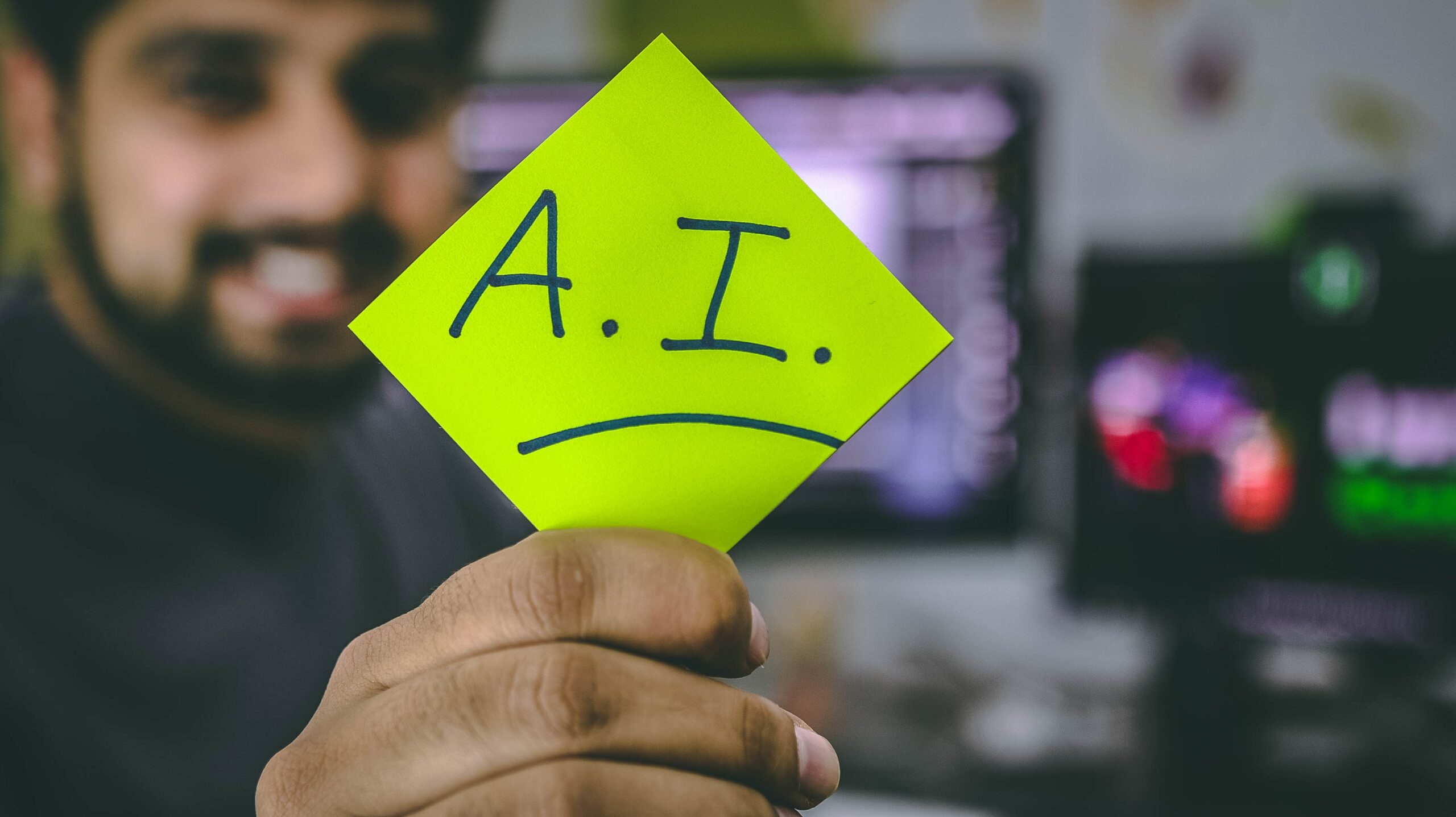
As reported here by Fortune news media, the U.S. Copyright Office has announced that images created by artificial intelligence programs (“A.I.”) are not copyrightable. A.I. programs have, of course, been in the news lately given the public launch of A.I. online products like OpenAI’s ChatGPT and Microsoft’s Bing. ChatGPT has been famously writing quality college term papers, poetry and other written materials. See Atlantic media report here. On the other hand, the Microsoft Bing version of ChatGPT has had some problems and may be pulled for retooling. See USAToday report here.
There are enormous implications for the use of successful A.I. products. On the plus side, A.I. may spur a huge leap in worker productivity, but, on the down side, may also lead to significant worker dislocations.
On the legal side, there is a large question about the legal status of and legal protections for A.I.-generated materials. When a business hires an employee to generate creative images, stories and other content, that content is protected under U.S. and international copyright laws. But what about A.I.-generated content? At least for now, the U.S. Copyright Office has given its answer: no copyright protection is available for A.I.-created materials.
For experienced copyright lawyers — like those of us here at Revision Legal — the Copyright Office’s announcement was not too surprising. Over the years, there have been earlier tests of other technology that have raised the question of copyrightability. Generally speaking, U.S. Copyright Law protects “original works of authorship” that are in a fixed medium. Books and movies are well-known examples.
Previous judicial rulings and announcements from the U.S. Copyright Office have made it plain that “works of authorship” mean works of “human” authorship. A famous example involves “selfies” taken by macaque monkeys living on a nature preserve. A British photographer set up camera equipment, and a monkey used the camera to take photographs of itself. The photographer sought copyright protection for the monkey selfies. The courts and Copyright Office declined, holding that copyright requires human authorship.
The Copyright Office’s Formal AI Policy
The Copyright Office’s position on AI-generated works is not simply an informal announcement. In February 2023, the Office issued guidance in connection with the registration of Zarya of the Dawn, a comic book that combined human-authored text with AI-generated images created using Midjourney. The Office cancelled the registration for the image components while maintaining registration for the human-authored text and the selection and arrangement of those elements. The Office stated that it will not register works produced by machines or mechanical processes that operate without creative input or intervention from a human author.
In March 2023, the Copyright Office published further guidance in the Federal Register stating that copyright protection may apply to AI-generated material only where the work contains sufficient human authorship. This requires that a human make sufficiently creative choices in the selection, arrangement, or modification of AI-generated content. Prompting an AI model—even with detailed, elaborate prompts—does not by itself constitute the kind of creative authorship that copyright law requires, because the human does not control the specific expressive elements the AI ultimately produces.
The Human Authorship Requirement: Legal Foundation
The human authorship requirement is grounded in the Copyright Act of 1976, 17 U.S.C. § 102(a), which extends protection to “original works of authorship fixed in any tangible medium of expression.” The word “authorship” has consistently been interpreted by courts to require a human creator. In Burrow-Giles Lithographic Co. v. Sarony, 111 U.S. 53 (1884), the Supreme Court defined an author as the party who gives the work its creative form—who makes the intellectual conception and expression. Nothing in subsequent jurisprudence has extended authorship to non-human entities.
The Copyright Office’s Compendium of U.S. Copyright Office Practices has long stated that the Office will not register works produced by nature, animals, or plants, and has extended that policy to AI systems. The Office treats AI as a tool, not an author, regardless of how sophisticated the system is or how convincingly it mimics human creative output.
What This Means for Businesses Using AI-Generated Content
The practical implications of the Copyright Office’s position are significant for any business that uses AI-generated images, text, or other creative content:
- No copyright ownership over pure AI output: A business that commissions or produces purely AI-generated images has no copyright in those images. Any competitor can copy, modify, or republish the images without legal consequence under copyright law.
- Registration will be refused or cancelled: Attempting to register purely AI-generated works with the Copyright Office will result in refusal. Attempting to claim copyright in such works in litigation creates legal risk, including potential findings of fraud on the copyright office.
- Mixed human-AI works require careful analysis: Works that combine substantial human creative input with AI-generated elements may be partially registrable. The human-authored selection, arrangement, and modification of AI output can qualify for protection, but the AI-generated elements themselves cannot.
- AI-generated works enter the public domain immediately: Because uncopyrightable content cannot be owned, it is immediately available for public use. This undermines the competitive advantage of AI-generated marketing materials, product images, and other creative content that businesses may assume they own exclusively.
Training Data Litigation and Other Emerging Issues
The copyrightability of AI output is only one dimension of the legal landscape surrounding AI and intellectual property. A parallel and rapidly developing body of litigation concerns whether AI companies that trained their models on copyrighted works have infringed those works. Several major lawsuits have been filed against AI developers by artists, authors, and news organizations claiming that ingesting copyrighted works to train AI models constitutes copyright infringement under 17 U.S.C. § 106. These cases will define the boundaries of the fair use doctrine in the AI context and may take years to resolve.
For businesses and creators, the AI copyright landscape presents both risk and opportunity. Understanding what you do and do not own when you use AI tools—and structuring your creative workflows to maximize the human authorship that copyright law requires—is increasingly important to protecting your intellectual property position.
If you have questions about copyright protection for AI-assisted works, or if you are dealing with infringement of your human-authored creative content, the copyright attorneys at Revision Legal can help. Call us at 231-714-0100 or 855-473-8474 for a consultation.