
Trade dress can protect the overall look of a fashion design—a handbag’s silhouette, a shoe’s signature sole, a recognizable pattern—but only if consumers have come to associate that look with a single brand and the design is not functional. Because the Supreme Court held in Wal-Mart Stores, Inc. v. Samara Brothers, Inc., 529 U.S. 205 (2000), that product design is never inherently distinctive, designers must prove secondary meaning. For that reason, most fashion brands combine trade dress with trademarks, copyright, and design patents rather than relying on any one of them.
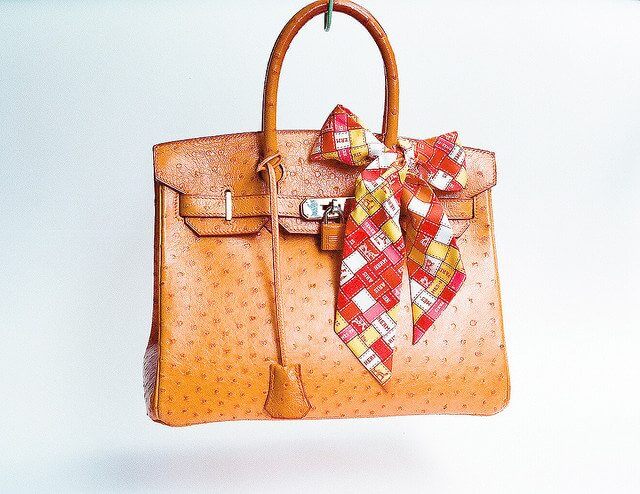
Photo credit: Wen-Cheng Liu
This article covers what trade dress can and cannot do for fashion designers, how courts have applied it to high-profile designs, and how to build a layered protection strategy.
What Trade Dress Protects in Fashion
Trade dress is a form of trademark protection under Section 43(a) of the Lanham Act, 15 U.S.C. § 1125(a). Where a word mark or logo identifies a brand by name, trade dress protects the visual appearance of a product or its packaging. In fashion, that can include:
- the distinctive shape or configuration of a handbag, shoe, or accessory;
- a signature design element used consistently across a product line;
- a recurring color placement, pattern, or combination of features; and
- packaging, boxes, shopping bags, and retail presentation.
The distinction between product design and packaging is critical. Wal-Mart itself was a fashion case—it involved a line of children’s clothing—and the Court held that a product’s design is protectable only upon a showing of secondary meaning. Packaging, by contrast, can sometimes be protected immediately, as we explain in our article on inherently distinctive trade dress.
The Secondary Meaning Hurdle for Designers
Secondary meaning exists when the primary significance of a design, in the minds of consumers, is to identify its source rather than the product itself. For an established luxury house with a decades-old signature design, that may be provable. For an emerging designer, it usually is not—at least not yet. Courts and the USPTO look for evidence such as consumer surveys, long and exclusive use, advertising that calls attention to the design, sales, unsolicited media coverage, and intentional copying. We walk through that evidence in detail in our guide to proving secondary meaning of trade dress.
Fashion presents special challenges. Trends spread quickly, similar silhouettes appear across many brands, and designers often draw on historical styles. In In re Jasmin Larian, LLC, 2022 USPQ2d 290 (T.T.A.B. 2022) (precedential), the Trademark Trial and Appeal Board affirmed the refusal to register the design of the Cult Gaia “Ark” handbag as generic and, alternatively, as lacking acquired distinctiveness. The record showed similar bags sold by others, some before the applicant’s sales, and the applicant’s own statements acknowledging that the design drew on a traditional bag. A popular design is not the same as a source-identifying one.
Functionality and Aesthetic Functionality
Even a famous design is unprotectable if it is functional. For unregistered trade dress, the party claiming protection “has the burden of proving that the matter sought to be protected is not functional.” 15 U.S.C. § 1125(a)(3). Under TrafFix Devices, Inc. v. Marketing Displays, Inc., 532 U.S. 23 (2001), a feature is functional if it is essential to the use or purpose of the article or affects its cost or quality.
Fashion raises a second, subtler question: aesthetic functionality. Features that are purely ornamental can still be denied protection if exclusive rights would put competitors at a “significant non-reputation-related disadvantage,” a standard the Supreme Court discussed in Qualitex Co. v. Jacobson Products Co., 514 U.S. 159 (1995), and TrafFix. In an industry where attractiveness is the product, this doctrine can decide the case.
Louboutin: Signature Designs Can Be Protected—Within Limits
The leading fashion trade dress decision remains Christian Louboutin S.A. v. Yves Saint Laurent America Holding, Inc., 696 F.3d 206 (2d Cir. 2012). The district court had concluded that a single color can never serve as a trademark in the fashion industry. The Second Circuit disagreed, holding that no per se rule governs single-color marks in fashion and that the district court’s conclusion rested on an incorrect understanding of aesthetic functionality.
The court found that Louboutin’s red lacquered outsole had acquired secondary meaning—but only where the red sole contrasts with the color of the shoe’s upper. It instructed the USPTO to limit Louboutin’s registration accordingly. Because YSL’s shoes were red all over, the red sole on those shoes was not a use of the mark as limited, and the court did not need to decide whether the modified mark was functional.
For designers, Louboutin shows both the promise and the precision of trade dress: a signature element can be protected, but only to the extent the evidence shows consumers actually recognize it.
Knockoffs, Parody, and Jack Daniel’s
Brands enforcing trade dress against “artistic” or parody products got an important boost from Jack Daniel’s Properties, Inc. v. VIP Products LLC, 599 U.S. 140 (2023). The Supreme Court held that the heightened First Amendment screening test known as Rogers does not apply when an alleged infringer uses another’s trademark as a designation of source for its own goods.
The Second Circuit applied that ruling to footwear in Vans, Inc. v. MSCHF Product Studio, Inc., No. 22-1006 (2d Cir. Dec. 5, 2023), affirming a preliminary injunction against MSCHF’s “Wavy Baby” sneakers, which mimicked the trade dress of Vans’ Old Skool shoe. The court concluded that Vans was likely to show MSCHF used Vans’ marks and trade dress as source identifiers, so no special First Amendment protection applied. Calling a knockoff “commentary” is not a reliable defense.
Copyright and Design Patents: Filling the Gaps
Because trade dress protection is hard to obtain for new designs, fashion brands should consider the alternatives. The Supreme Court in Wal-Mart noted that producers can seek design patents or copyrights to protect designs while secondary meaning develops.
Copyright
Clothing is a “useful article,” so its shape and cut are not protected by copyright. But in Star Athletica, L.L.C. v. Varsity Brands, Inc., 580 U.S. 405 (2017), the Supreme Court held that a design feature of a useful article is eligible for copyright if it can be perceived as a work of art separate from the article and would qualify as a protectable pictorial, graphic, or sculptural work if imagined separately. Original prints, graphics, and surface decorations can qualify; the garment’s shape cannot. See our discussion of fast fashion copyright infringement for how these rights are enforced.
Design Patents
A design patent protects a new, original, and ornamental design for an article of manufacture, 35 U.S.C. § 171, for 15 years from the date of grant, 35 U.S.C. § 173. Unlike trade dress, a design patent does not require consumer recognition, which makes it valuable for new silhouettes. Timing matters: designs must be new, so file before public disclosure creates problems. Note also that in LKQ Corp. v. GM Global Technology Operations LLC, 102 F.4th 1280 (Fed. Cir. 2024) (en banc), the Federal Circuit replaced the long-standing Rosen-Durling test for design patent obviousness with a more flexible analysis, which may make some design patents easier to challenge. Our step-by-step guide explains how to get a design patent.
Building a Layered Protection Strategy
The most resilient fashion brands do not rely on one form of IP. A practical approach:
- Register your brand name and logo as trademarks for the relevant goods.
- File design patent applications for new, commercially important designs before launch.
- Register copyrights in original prints, graphics, and artwork.
- Choose one or two signature elements, use them consistently, and promote them with look-for advertising to build secondary meaning.
- Document sales, press, and copying as it happens.
- Enforce promptly against knockoffs and counterfeits, including on online marketplaces.
Protect Your Designs Before the Knockoffs Arrive
Trade dress can become one of a fashion brand’s most valuable assets because it can last as long as consumers continue to recognize the design. But it takes time and evidence to establish, and it must be paired with design patents, copyrights, and trademarks to protect new collections in the meantime.
Revision Legal represents designers and apparel and consumer brands in building IP portfolios and pursuing copycats, including through our anti-counterfeiting and online enforcement services. If a competitor is copying your designs, or you want to protect a new line before launch, contact us through the form on this page or call (855) 473-8474.