



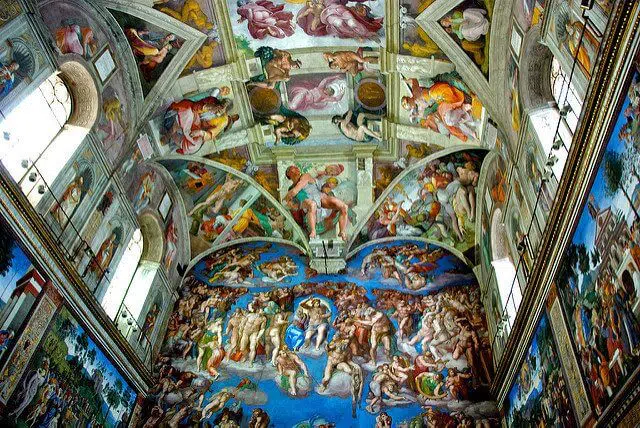

Fortunately for Michelangelo, and many other great Renaissance artists, the church and rich merchants were able to pay so much money to famous artists for a single work that the artists did not need to sell multiple copies of their work in order to make a living.
This all changed with the printing press, then with photography, and ultimately the Internet arrived to make the copying and transferring of creative works as fast and easy as clicking a button. Maybe clicking it twice. When copying became this easy, copyright law was developed to serve as a market fix. It could take a painter four years to paint a masterpiece, but it may have taken a week for a skilled forger to make a copy. Copyright law gave artists the ability to control the market for copies of their art, which in turn incentivized artists to continue making that art.
The point of all of this is to say that the idea of “copyright law as a market fix” has, historically and internationally, only told part of the story. Around the world, copyright law has long stood for another proposition: that the artist has a moral right to their works. As the theory goes, when a man or woman’s creative spark and artistic labor creates something new, that something belongs to the artist.
In America, however, there is no blanket, moral rights protection for artists. At least, there wasn’t until 1990, when Congress passed the Visual Artists Rights Act, which grants moral rights for some types of artistic works. VARA, as it is known, covers only “works of visual art,” which includes paintings, sculptures, drawings, prints, and still photographs produced for exhibition. Additionally, no more than 200 copies can be produced of the work if the work and its copies are to receive the protections of VARA.
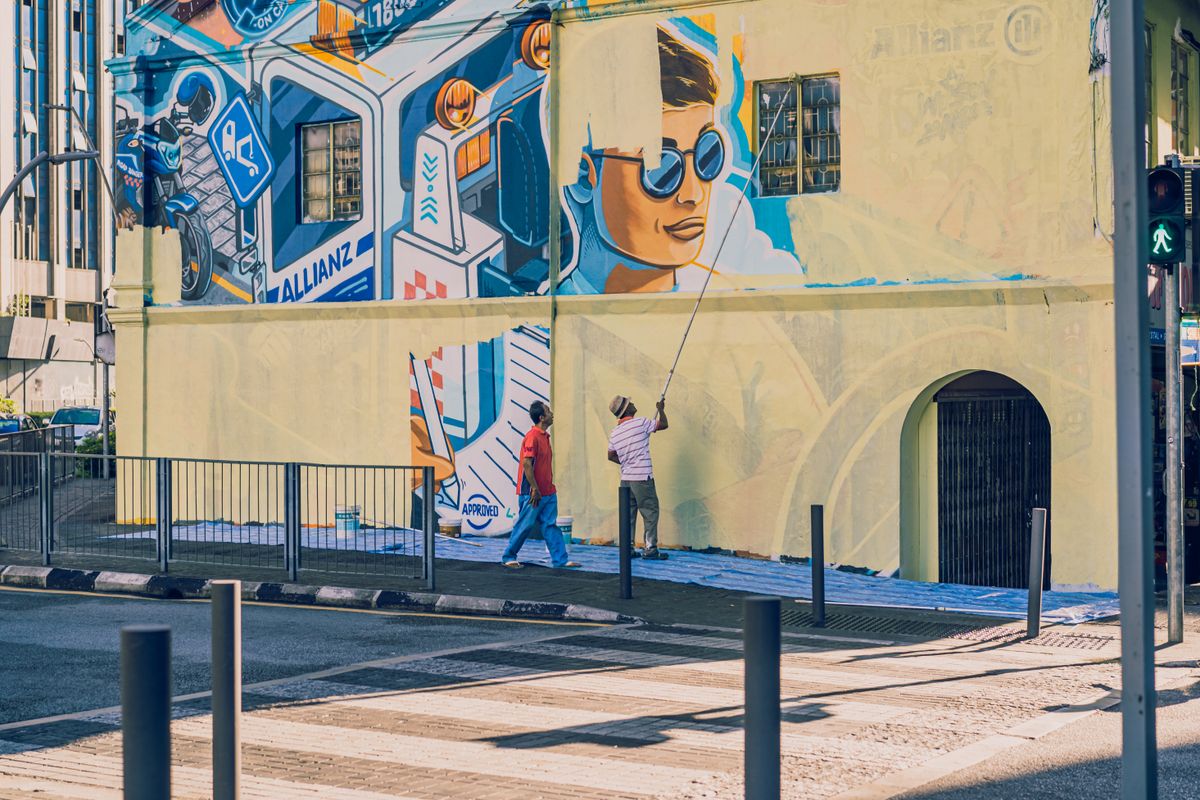
And those protections are pretty substantial. The most common right invoked under VARA is the right of the artist to prevent destruction or mutilation of their work. This comes up frequently with murals painted in parks and on buildings, including recently in Detroit. VARA also allows artists to remove their name from works that they authored, but were subsequently changed against the artist’s wishes. Believe it or not, this was not a given before VARA.
Of course, there are exceptions to VARA protections. For one, if a building owner makes a good-faith attempt to notify an artist that he or she plans to remove the artist’s work without damaging it, the building owner will be able to remove the work, in most cases. Another exception is that VARA does not protect works created before its enactment date (in December of 1990). Finally, unlike standard copyrights which last for the life of the author plus seventy years, VARA rights die with the artist.
Exceptions aside, VARA is an important protection for particularly susceptible works of art. It opens the door to federal court for artists, and allows up to $20,000 in damages, or even up to $100,000 in damages if the work was copied or destroyed intentionally.
If you believe VARA can apply to your work, or you have any other questions regarding federal copyright protection, registration, or infringement, please give our expert copyright attorneys a call at 855-473-8474.
What Rights VARA Actually Grants
VARA, codified at 17 U.S.C. § 106A, grants two categories of moral rights to qualifying artists: the right of attribution and the right of integrity. The right of attribution allows an artist to (1) claim authorship of the work; (2) prevent the use of her name as the author of any work she did not create; and (3) prevent use of her name as the author of her work if the work has been distorted, mutilated, or modified in a way that would be prejudicial to her honor or reputation. The right of integrity allows the artist to prevent intentional distortion, mutilation, or modification of the work that would prejudice the artist’s honor or reputation, and to prevent the destruction of a work of “recognized stature.”
These rights exist independently of — and in addition to — the economic rights granted by standard copyright law under 17 U.S.C. § 106. An artist can transfer copyright in a work to a gallery, a collector, or a corporation, and still retain VARA rights. Conversely, VARA rights can be waived by the artist in a signed written agreement, but they cannot be assigned to a third party. They belong exclusively to the human creator of the work.
Works of Recognized Stature: The Destruction Standard
The most litigated aspect of VARA is the destruction standard for works of “recognized stature.” VARA does not define the term, and courts have applied various formulations. The Second Circuit in Carter v. Helmsley-Spear, Inc., 71 F.3d 77 (2d Cir. 1995), adopted a two-tier test: the work must be recognized and stature must be of high quality. Evidence of recognized stature typically includes expert testimony from art historians or curators, critical reviews, exhibition history, acquisition by museums or prominent collectors, and academic treatment.
The practical stakes of the recognized stature test were dramatically illustrated in Cohen v. G&M Realty L.P., the 5Pointz litigation decided in the Eastern District of New York in 2018. The court found that the aerosol artworks on the 5Pointz building in Long Island City had achieved recognized stature and that the building owner’s whitewashing of those works constituted a willful violation of VARA. The court awarded the maximum statutory damages of $150,000 per work for 49 works, totaling $6.75 million. The Second Circuit affirmed. The case fundamentally changed how property developers and their attorneys evaluate demolition and redevelopment projects involving commissioned or authorized artwork.
VARA’s Exclusions and Limitations
VARA’s coverage is narrower than its ambitions. The statute expressly excludes motion pictures and other audiovisual works, electronic publications, applied art, works made for hire, advertising and promotional materials, and packaging. The “works made for hire” exclusion is particularly significant: an artist who creates work within the scope of employment or pursuant to a qualifying work-for-hire contract does not hold VARA rights, because she was never the statutory author under the Copyright Act.
The limitation to no more than 200 signed and consecutively numbered copies also creates meaningful boundaries for commercial artists. A photographer who produces a limited edition print run of 200 signed copies qualifies. A photographer who produces unlimited prints, even if individually signed, does not. This limitation reflects Congress’s attempt to confine VARA to works that have an inherent scarcity value — works that buyers reasonably believe are unique or extremely limited.
Works incorporated into buildings receive special treatment under 17 U.S.C. § 113(d). If a work of visual art was installed in a building with the owner’s written consent, and the work cannot be removed from the building without being destroyed, the artist loses her VARA rights to prevent destruction if she consented to the installation after VARA’s effective date. But if the work can be removed without destruction, the building owner must give the artist ninety days’ notice before any removal or demolition, and the artist may remove the work herself.
VARA in the Context of Digital Art and NFTs
The emergence of digital art and non-fungible tokens has renewed interest in VARA’s scope. A digital artwork — a still image, a digital print produced for exhibition — may qualify as a VARA-covered work if it meets the statutory definition of “work of visual art” and satisfies the copy limitation. The harder question is whether the moral rights framework extends meaningfully to digital distribution, where an original is functionally indistinguishable from a copy and where the concepts of “distortion” and “mutilation” may apply differently to editable digital files.
Artists entering NFT contracts should pay careful attention to how those agreements treat VARA waivers. An NFT smart contract that purports to transfer all intellectual property rights may or may not constitute a valid VARA waiver under 17 U.S.C. § 106A(e), which requires a written instrument signed by the artist. Blanket IP transfer language in a terms of service may not satisfy that requirement. Artists and platforms alike should obtain explicit, written VARA waivers when they intend to modify or alter digital artworks post-sale.
Enforcement: What Artists Can Recover
VARA violations are actionable under 17 U.S.C. § 501 and carry the same remedies available under the Copyright Act: actual damages and lost profits, or statutory damages ranging from $750 to $30,000 per work, and up to $150,000 per work for willful violations. In cases where the artist can prove that the defendant deliberately and knowingly violated her moral rights — as the court found in 5Pointz — the full statutory maximum is available for each work. Injunctive relief is also available to prevent ongoing or threatened violations, and the prevailing party may recover attorney’s fees under 17 U.S.C. § 505.
If you are an artist whose work has been mutilated, destroyed, or misattributed, or a property owner or developer seeking to understand your obligations before modifying or demolishing a building with installed artwork, Revision Legal’s copyright attorneys can advise you. Contact us through the form on this page or call 855-473-8474.


